Peripheral Artery Disease: All You Need to Know

Many patients walk into a vascular surgery clinic describing leg pain as "just old age" or "tiredness," when in reality it could be an early warning sign of Peripheral Artery Disease (PAD). In clinical practice, Dr. Ravul Jindal, Director of Vascular and Endovascular Surgery at Fortis Hospital, Mohali, often reminds patients that this vascular condition is progressive but manageable - provided it is recognised early. This guide explains everything you need to know about the disease: its causes, symptoms, diagnosis, treatment, and prevention, based on current medical evidence and over two decades of clinical experience in open and endovascular surgery.
What Is Peripheral Artery Disease?
This condition develops when the arteries supplying blood to the limbs - usually the legs - become narrowed due to plaque buildup, a process known as atherosclerosis. As the arteries narrow, blood flow to the muscles and tissues drops, causing leg discomfort, slow-healing wounds, and, in advanced cases, tissue death. Globally, this circulatory disorder affects a large share of adults over 65 and is far more common in people with diabetes, smokers, and those with high cholesterol. Based on medical evidence, early-stage disease frequently has no symptoms at all, which is why specialists often call it a silent disease - and why screening matters even before pain begins.
Causes and Key Risk Factors
Common Risk Factors
The leading risk factors for this vascular disease include:
Smoking (current or past) - among the strongest contributors Diabetes, particularly when uncontrolled diabetes is present Hypertension (high blood pressure) High cholesterol and elevated triglycerides Chronic kidney disease Age above 65, or above 50 with additional risk factors
Lesser-Known Causes
Beyond plaque buildup, narrowed arteries can also stem from coagulation abnormalities, vasculitis (inflammation of the artery wall), or popliteal artery entrapment syndrome (PAES) in younger, athletic patients. In our clinical experience, patients with diabetic neuropathy, arthritis, or severe lung disease are often diagnosed late because limited mobility hides the classic exertional pain pattern that usually signals trouble.
Recognising the Symptoms
The hallmark symptom of this condition is intermittent claudication - pain, cramping, or fatigue in the calves, thighs, or hip that appears during walking and eases with rest. As the disease advances, patients may notice:
Rest pain, especially at night Coldness or numbness in the feet Skin color changes, such as pallor or cyanosis Hair loss on the legs and shiny skin Foot ulcers or toe ulcers that heal slowly Erectile dysfunction in men, when the aortoiliac artery is involved
Patients often ask whether the disease can be "silent." The answer is yes - many remain asymptomatic even as arteries narrow further, which is exactly why regular screening matters for high-risk individuals.
Stages of the Disease
Vascular specialists commonly classify severity using the Rutherford classification, ranging from Stage 0 (Asymptomatic) through Stage I–III (mild to severe claudication), and finally Stage IV–VI, representing critical limb ischemia (CLI) with rest pain, non-healing wounds, and tissue loss. A simpler clinical model divides the condition into asymptomatic, chronic symptomatic, chronic limb-threatening ischemia, and acute arterial occlusion - a sudden, emergency blood clot blockage requiring an immediate procedure. Based on medical evidence, only a small proportion of patients progress to the most severe stages when treated early.
How Doctors Diagnose PAD
Diagnosis begins with a detailed medical history and physical exam, including pulse checks and bare-foot inspection. The most widely used screening tool is the Ankle-Brachial Index (ABI), a simple, painless test comparing blood pressure in the arm and ankle. If results are inconclusive, a vascular surgeon may recommend Doppler ultrasound, a CT angiogram, Magnetic Resonance Angiography (MRA), or segmental pressure measurements to map the exact site of arterial blockage. A treadmill exercise test and routine blood tests for cholesterol and blood sugar often complete the diagnostic picture.
Treatment Options
Lifestyle Changes
Smoking cessation remains the single most effective step a patient can take. Structured Exercise Therapy (SET) - supervised walking programs with rest breaks - combined with a heart-healthy diet rich in fruit, vegetables, and whole grains, can meaningfully improve walking distance and claudication relief.
Medications
Depending on the patient's profile, treatment may include antiplatelet drugs such as aspirin or clopidogrel, statins to lower LDL cholesterol, blood pressure medication, and cilostazol, a vasodilator that helps extend pain-free walking distance.
Procedures and Surgery
For advanced disease, options include angioplasty with stent placement, atherectomy, endarterectomy, or peripheral artery bypass surgery. In our clinical experience, the right procedure depends entirely on the location and extent of the blockage - there is no single approach that suits every patient, which is why individualised evaluation matters.
Complications of Untreated PAD
Left unmanaged, this condition can progress to critical limb ischemia, gangrene, infection, and ultimately amputation. Because atherosclerosis is a systemic process, it also raises the risk of heart attack and stroke. Based on medical evidence, managing cardiovascular risk factors alongside leg symptoms is essential for long-term survival and quality of life.
Foot Care Tips for Patients
Patients often ask how to protect their feet at home. We advise daily foot inspection, thoroughly washing and drying feet, avoiding barefoot walking, and wearing well-fitting shoes and socks. Because reduced blood flow slows healing, even small cracks or cuts should be checked promptly to prevent infection from setting in.
When to See a Vascular Surgeon in Mohali or Chandigarh?
If you notice new symptoms, worsening symptoms, rest pain, or a foot ulcer, it is time to consult a qualified vascular surgeon. Patients searching for a vascular surgeon in Mohali, Chandigarh, or elsewhere in Punjab can book a consultation with Dr. Ravul Jindal at Fortis Hospital, Mohali, for a personalised evaluation. Seek emergency care immediately if a foot suddenly loses feeling, movement, or changes colour - this may signal acute blood flow loss.
Outlook and Prevention
This is a lifelong condition with no cure, but it is highly manageable. Quitting smoking after diagnosis meaningfully improves life expectancy, alongside regular exercise, a balanced diet, and consistent risk-factor management for diabetes, high cholesterol, and high blood pressure. Routine follow-up with a vascular specialist remains the most reliable way to prevent progression and protect long-term mobility.
Conclusion
Peripheral artery disease should never be dismissed as ordinary leg pain. Early recognition, timely diagnosis, and individualised treatment - guided by an experienced vascular surgeon like Dr. Ravul Jindal - can protect both your limb and your life. If you notice any of the symptoms discussed above, schedule a consultation at Fortis Hospital, Mohali, today.
This article is intended for general informational purposes and does not replace personalised medical advice. Please consult a qualified vascular specialist for diagnosis and treatment specific to your condition.
Book a Consultation with Dr. Ravul Jindal - Vascular Surgeon, Fortis Hospital Mohali
Book your consultation while you read.
Recent Insights

The Silent Threat in Your Legs: Why Untreated PAD Can Cost You a Limb - or Your Life

Difference Between Type 1 and Type 2 Diabetes: Causes, Symptoms and Treatment

Diabetic Foot Ulcer: Warning Signs, Causes, and When to Seek Treatment

Blood Clot in Leg: Symptoms You Should Never Ignore
Frequently Asked Questions
What is peripheral artery disease (PAD) in simple terms?
What are the earliest warning signs of PAD?
How serious is PAD if left untreated?
Related Articles

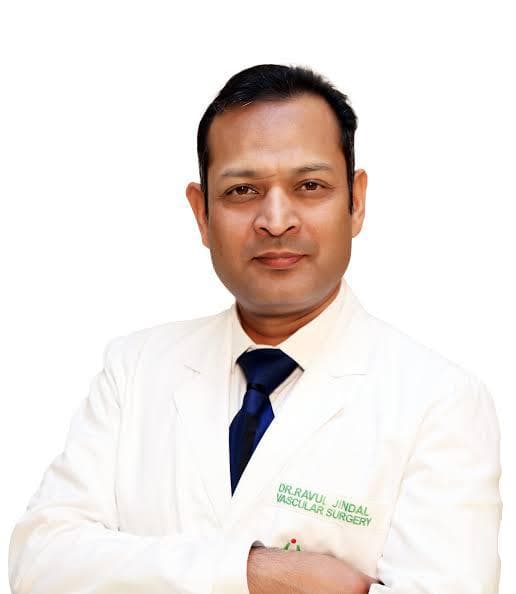
Dr. Ravul Jindal Team
Director, Vascular & Endovascular Surgery
MBBS, MS (General Surgery), FRCS (Edinburgh), DNB, FIVS (Fellow of India Vascular Surgery)
Director of Vascular Surgery at Fortis Hospital Mohali with 30+ years of experience in varicose veins, DVT, diabetic foot, and endovascular surgery.