6 Stages of Varicose Veins: Symptoms & Treatment

6 Stages of Varicose Veins: A Complete Guide to Symptoms, Progression, and Treatment
Varicose veins rarely appear overnight and worsen without warning - they move through six stages, each with distinct signs that patients in Mohali, Chandigarh, and across Punjab frequently bring up during consultation. In clinical practice, Dr. Ravul Jindal, Director of Vascular and Endovascular Surgery at Fortis Hospital, Mohali, often tells patients that understanding the stages of varicose veins is the single most useful thing they can do to protect their leg health long term.
Varicose veins are abnormal enlargements and twisting of veins, most often affecting the legs, that develop when tiny valves inside the veins stop working properly. Instead of blood moving efficiently back toward the heart, it begins pooling in the lower limb, raising pressure inside the vein - a state known as venous hypertension. Left unaddressed, this pooling of blood can progress into chronic venous insufficiency (CVI), a condition that affects 10–30% of adults, with women - especially after pregnancy or with advancing age -disproportionately affected. What begins as a cosmetic issue limited to the surface of the skin can, over time, evolve into serious problems including chronic wounds. This blog walks through each of the six stages, so patients across Punjab know exactly what changes to watch for and when to seek care.
Stage 1: Spider Veins and Early Capillary Changes
The earliest stage involves capillary veins - telangiectasia and reticular veins -becoming visible on the surface of the skin. These appear as fine red, purple, or blue tiny branches, resembling webs or thin threads, most visible in thinner people.
What Patients Notice
Most patients at this phase report no pain at all. A small number describe mild itching or burning, but the concerning issue here is largely about cosmetics rather than health. Even so, based on medical evidence, this early warning sign should not be dismissed - spider veins can indicate that deeper vein issues are beginning to develop later.
Stage 2: Visible, Prominent Varicose Veins
As the condition advances, veins in the subcutaneous layer become curved, thick, and clearly prominent - no longer subtle, but noticeable on visual exam.
Early Physical Symptoms
Patients often ask why their legs suddenly feel different by evening. At this stage, heaviness in the calves, cramps, and a tired sensation are common after prolonged sitting or standing. Some describe muscle pulling, which makes daily activities feel harder. Starting varicose vein treatment here can meaningfully stop veins from getting worse and reduce discomfort before symptoms progress.
Stage 3: Symptomatic Varicose Veins with Swelling
By the third stage, chronic venous insufficiency begins producing more obvious and uncomfortable symptoms.
Common Complaints in Clinic
Swelling legs, particularly around the ankles and calves, along with cramping, aching, and a throbbing feeling, are frequently reported. The skin near affected veins may feel warm or tender. In clinical practice, this is usually the stage at which patients from Chandigarh and Mohali actively seek varicose vein treatment, since discomfort now interferes with leg health and daily comfort.
Stage 4: Skin Discoloration and Swelling (Lipodermatosclerosis)
Stage 4 marks a shift from vein-level to skin-level changes, with serious swellings developing in the lower leg, particularly above the ankle.
Recognizing Skin Changes
The skin may begin darkening, drying, and thinning, sometimes appearing tight or shiny, and becoming fragile skin that bruises or breaks easily. Chronic inflammation at this stage causes the skin to change color and become prone to injury. Compression stockings and keeping the legs elevated can help manage symptoms, but medical treatment is typically required to stop the problem from getting worse.
Stage 5: Healed Skin Changes and Scarring
At this stage, the skin shows visible evidence of long-standing long-term poor blood flow.
Signs of Past Damage
Discolored, hard, or thin skin, along with scars from healed wounds, are common findings around the ankles. Ongoing skin care and treatment are essential to prevent new wounds and support healthy skin, since previously ulcers healed areas remain vulnerable to breakdown again.
Stage 6: Active or Recently Healed Venous Ulcers
The final and most serious stage involves open wounds, or wounds that have only recently healed, typically near the ankles.
What an Active Ulcer Looks Like
Clinically, an active ulcer often has an uneven edge, with a deep center that appears damp and red, surrounded by skin showing chronic inflammation. Even once skin closed, the area remains weak skin, at risk of surrounding skin breakdown and may break open again without managed carefully follow-up. Regular check-ups and continued vein care are essential to prevent future ulcers — this is where ongoing monitoring, not just one-time treatment, matters most.
Modern Treatment Options for Varicose Veins
Patients often ask whether surgery is the only option. Based on medical evidence and current vascular practice, minimally invasive surgical treatment is now as effective as traditional surgery, without the extended recovery. This includes thermal ablation - using endovenous laser treatment (EVLA) or endovenous radiofrequency ablation therapy (EVRFA) - and non-thermal ablation options such as sclerotherapy and endovenous cyanoacrylate closure. These techniques work by closing off the diseased vein so blood flowing through it stops, relieving the high venous pressure driving the disease. This latest surgical technique has been gaining popularity because it leaves only a small wound (2-3 mm), offers minimal discomfort, carries reduced risk of complications, and can typically be performed on an outpatient basis with strong treatment results.
For patients in Mohali, Chandigarh, and across Punjab, early evaluation at a vascular surgery center offering these advanced options can prevent progression from a purely cosmetic concern into a condition requiring wound care.
Book a Consultation with Dr. Ravul Jindal - Vascular Surgeon, Fortis Hospital Mohali
Book your consultation while you read.
Recent Insights

Frequently Asked Questions
What are the first signs of varicose veins?
At what stage do varicose veins require treatment?
Are varicose vein ulcers dangerous?
Why are varicose veins more common in women?
Related Articles

Sclerotherapy for Varicose Veins: Procedure, Benefits, and Recovery

Laser Treatment for Varicose Veins: How Does EVLA Work?

How to Prevent Varicose Veins in Legs During Pregnancy
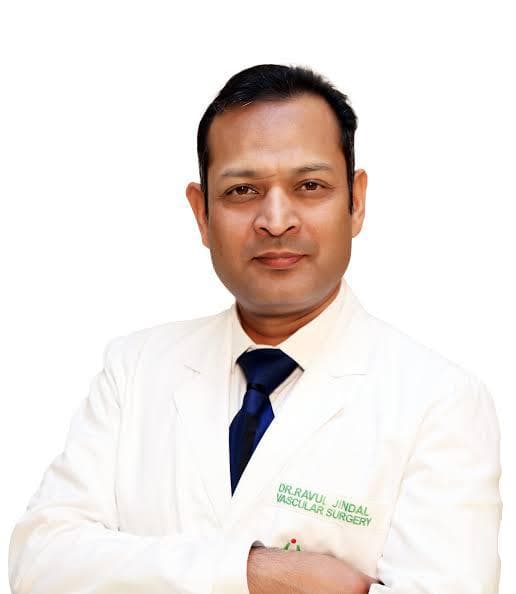
Dr. Ravul Jindal Team
Director, Vascular & Endovascular Surgery
MBBS, MS (General Surgery), FRCS (Edinburgh), DNB, FIVS (Fellow of India Vascular Surgery)
Director of Vascular Surgery at Fortis Hospital Mohali with 30+ years of experience in varicose veins, DVT, diabetic foot, and endovascular surgery.