How to Prevent Varicose Veins in Legs During Pregnancy

Pregnancy brings about many physical changes, and varicose veins in legs during pregnancy are among the most common concerns expectant mothers raise in clinic visits. In clinical practice, nearly one in three women notice some form of vein swelling by their third trimester, especially those in their second or third pregnancy. While these bulging, rope-like veins can cause discomfort, understanding how to prevent varicose veins during pregnancy can help you manage symptoms and protect your long-term vein health.
As a vascular and endovascular surgeon treating patients across Mohali, Chandigarh, and the wider Punjab region, I've seen how early awareness and simple lifestyle changes make a real difference. This guide covers what causes pregnancy varicose veins, how to spot the symptoms early, and practical, medically sound prevention strategies.
What Are Varicose Veins During Pregnancy?
Varicose veins are swollen, enlarged veins that appear as twisted, bulging ropes under the skin, most often on the legs, ankles, or vulva. They occur when the valves inside your veins weaken, causing blood to stagnate or flow backward instead of returning efficiently to the heart. Hemorrhoids, a form of varicose vein around the rectum, and spider veins - thinner, red or blue lines - often appear alongside them. Most cases surface during the third trimester, when pressure on the pelvic veins peaks.
Why Do Varicose Veins Develop During Pregnancy? (Causes)
Several physiological changes during pregnancy contribute to venous insufficiency:
- Hormonal changes, particularly a rise in progesterone, relax the walls of your blood vessels.
- Blood volume increases by up to 40-50% to support the growing fetus.
- The expanding uterus places extra pressure on the pelvic veins and the large vein carrying blood from your legs.
- Genetics play a role - if your mother or grandmother had varicose veins during pregnancy, your risk rises.
Patients often ask why the risk climbs with each pregnancy. Based on medical evidence, the likelihood of developing varicose veins increases from roughly 23% after a first pregnancy to over 30% by the fourth, as repeated vein stretching gradually weakens the valves.
Symptoms to Watch For
Recognizing symptoms early allows you to act before they worsen. Common signs include:
- Heavy, tired, or sore legs
- Itching around the swollen veins
- Leg cramps, especially at night
- Aching, throbbing, or tenderness
- Swelling in the legs and ankles, worse after prolonged sitting or standing
If you experience sudden redness, warmth, or a blood clot-like lump, contact your healthcare provider promptly, as this could indicate superficial thrombophlebitis or, rarely, deep vein thrombosis.
How to Prevent Varicose Veins in Legs During Pregnancy
Prevention is largely about supporting healthy circulation and reducing pressure on your leg veins. Here's what I recommend to patients in my practice:
Stay Active With Regular Physical Activity
Low-impact exercise such as walking, swimming, prenatal yoga, or cycling activates blood flow and strengthens vein tone. You don't need long sessions - short, consistent walks throughout the day are enough to make a measurable difference.
Elevate Your Legs
Leg elevation while sitting or lying down helps blood return toward the heart instead of pooling in the lower legs. Elevating your feet above hip level for 15-20 minutes, a few times daily, reduces swelling effectively.
Wear Compression Stockings
Compression stockings or supportive tights are one of the most evidence-backed prevention tools. They apply gentle, graduated pressure that supports venous return and eases heaviness by the end of the day.
Sleep on Your Left Side
Sleeping on your left side keeps pressure off the large vein that carries blood from your legs to your heart, improving overnight circulation and reducing morning swelling.
Watch Your Position
Avoid sitting with your legs crossed, and change position frequently to avoid long periods of sitting or standing. If your work requires standing, shift your weight periodically and take short movement breaks.
Manage Diet and Sodium Intake
Limit sodium intake, drink plenty of water, and increase fiber to prevent water retention, which worsens swelling. Citrus fruits, rich in rutin, and grapes, containing flavonoids, may support venous return as part of a balanced pregnancy diet.
Keep Legs Cool
Heat causes legs to swell further, so avoid prolonged heat exposure and consider rinsing legs with cool water from ankle to thigh to calm discomfort.
Treatment Options If Prevention Isn't Enough
During pregnancy, treatment is largely conservative - weight control, compression stockings, leg elevation, and cold water rinses. Sclerotherapy, laser therapy, and surgery are generally contraindicated while pregnant and postponed until after childbirth, when the body has had time to recover and veins may shrink naturally.
When to See a Vascular Specialist in Mohali or Chandigarh
Most varicose veins during pregnancy are harmless, but certain signs warrant prompt medical attention: bleeding from a vein, an open sore near the vein, or sudden pain, redness, and swelling suggestive of a blood clot. Patients in Mohali, Chandigarh, Ludhiana, and surrounding parts of Punjab experiencing persistent discomfort should consult a vascular specialist for a proper evaluation, including a Doppler ultrasound if symptoms are severe. Early consultation ensures both maternal comfort and safety.
Outlook: Do Varicose Veins Go Away After Pregnancy?
In most cases, yes. Varicose veins are typically temporary and begin shrinking within three to six months after delivery as blood volume and hormone levels normalize. However, with multiple pregnancies, veins may take longer to fade or persist, in which case a follow-up with your vascular surgeon can help determine whether further treatment is needed.
Book a Consultation with Dr. Ravul Jindal - Vascular Surgeon, Fortis Hospital Mohali
Book your consultation while you read.
Recent Insights

Frequently Asked Questions
Is walking good for varicose veins during pregnancy?
When do varicose veins typically appear during pregnancy?
Can I get varicose vein treatment while pregnant?
Do varicose veins go away after delivery?
Related Articles

Sclerotherapy for Varicose Veins: Procedure, Benefits, and Recovery

Laser Treatment for Varicose Veins: How Does EVLA Work?

Can Young People Get Varicose Veins? | Dr. Ravul Jindal
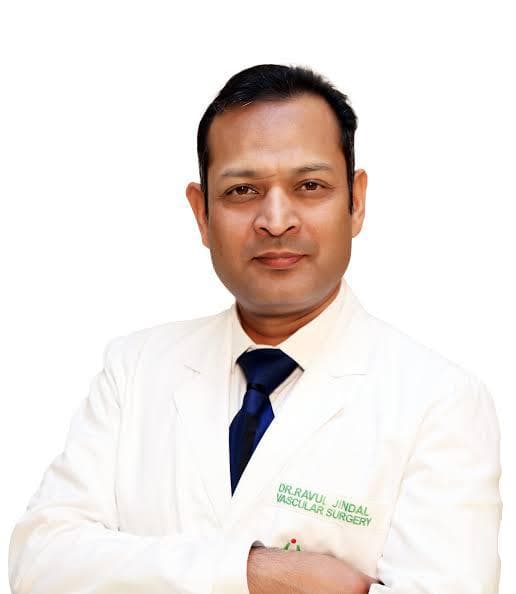
Dr. Ravul Jindal Team
Director, Vascular & Endovascular Surgery
MBBS, MS (General Surgery), FRCS (Edinburgh), DNB, FIVS (Fellow of India Vascular Surgery)
Director of Vascular Surgery at Fortis Hospital Mohali with 30+ years of experience in varicose veins, DVT, diabetic foot, and endovascular surgery.