Laser Treatment for Varicose Veins: How Does EVLA Work?

Varicose veins are more than a cosmetic concern - for many patients, they bring persistent aching, heaviness, and swelling that interferes with daily life. Endovenous Laser Ablation (EVLA) has emerged as one of the most effective, minimally invasive ways to treat these enlarged, twisted veins without the extended downtime associated with traditional stripping surgery. In clinical practice, patients frequently ask how a simple laser fibre can permanently close off a faulty vein - and the answer lies in a precise, ultrasound-guided technique that has been refined over decades of vascular research.
This blog breaks down exactly how EVLA for varicose veins works, what to expect before and after the procedure, and who makes a good candidate - explained from a vascular surgeon's perspective for patients across Mohali, Chandigarh, and the wider Punjab region.
What Is EVLA and How Does It Work?
Endovenous Laser Ablation, often shortened to EVLA, is a minimally invasive vein treatment that uses targeted laser energy to seal shut a diseased vein from the inside. Unlike open surgery, there is no need to physically remove the vein - it is simply closed off, and blood naturally reroutes through healthy veins nearby.
The procedure begins with a duplex ultrasound to map the affected vein and confirm the exact treatment path. Once the vein is located, a local anaesthetic numbs the area, and a thin laser fibre is inserted through a tiny entry point, usually near the knee or ankle, using a small catheter. Guided by continuous ultrasound imaging, the laser tip is positioned at the top of the diseased vein.
The EVLA Procedure Step by Step
Tumescent anaesthesia - a numbing fluid - is infiltrated around the vein through a series of small injections. The laser is then activated and slowly withdrawn along the length of the vein using a controlled, automatic pull-back technique. As the fibre moves, heat energy damages the vein wall, causing it to shrink, collapse, and permanently seal shut. The entire energy-delivery step typically takes just a few minutes, and the full appointment is usually completed within an hour as an outpatient procedure.
Advanced Laser Technology in EVLA
Modern EVLA systems commonly use a 1500 nm wavelength, which is considerably more water-absorbent than older 810 nm lasers. This means less power is required to achieve the same result, and less heat spread occurs in the surrounding tissue - reducing the risk of side effects like nerve irritation or skin burns. Based on medical evidence, this refinement in laser wavelength technology has meaningfully improved patient comfort and safety over the past decade.
Is EVLA Painful?
Most patients tolerate the procedure very well. A regional nerve block combined with tumescent anaesthesia numbs the treatment area, so the procedure itself is essentially pain-free. Some mild to moderate soreness along the treated vein can persist for one to two weeks afterward - this is normal and is managed with light walking, leg elevation, anti-inflammatory medication, and compression stockings. Occasionally, phlebitis (inflammation along the vein) may develop and should be reported to your treating doctor.
Benefits of EVLA Over Traditional Surgery
Compared to conventional vein stripping, this laser-based treatment offers several clear advantages:
- Performed under local anaesthesia - no general anaesthesia or hospital admission required
- Minimal to no discomfort during the procedure
- Both legs can often be treated in a single session
- Fewer complications and minimal scarring
- Faster return to normal routine, with far less time off work
- Cosmetic results that are generally equal to, or better than, surgical stripping
Preparing for Your EVLA Procedure
Before treatment, patients should disclose all current medications, vitamins, and supplements to their vascular surgeon, since certain medications may need to be paused beforehand. On the day of the appointment, avoid applying moisturiser or shaving the treatment area, and wear loose, comfortable clothing along with supportive walking shoes. Patients with a low pain threshold may take a mild over-the-counter analgesic beforehand, after discussing this with their provider.
Recovery After EVLA: What to Expect
Immediately after the procedure, compression stockings are applied, and patients are encouraged to take a short 20-30 minute walk before heading home - walking helps promote healthy circulation and reduces clot risk. Stockings are typically worn overnight on day one, then during daytime hours for a minimum of 14 days. Daily 30-minute walks are strongly recommended throughout the recovery period, while prolonged standing and strenuous exercise should be avoided until cleared by your doctor. Long-haul flights are best avoided for three to four weeks post-treatment. A follow-up ultrasound at around two weeks confirms that the treated vein has sealed successfully and rules out deep vein occlusion.
Risks and Possible Complications of EVLA
This treatment is considered very safe when performed by an experienced vascular specialist, but as with any medical procedure, some risks exist:
- Deep vein thrombosis - internal vein clots are rare following this procedure
- Temporary nerve irritation - surface sensory nerve damage can occur but typically resolves within weeks to months
- Bruising, tingling, or mild numbness near the treatment site
- Skin burns - reported in medical literature but uncommon with modern laser calibration
In clinical practice, most side effects are minor and resolve on their own within a few weeks.
Who Needs EVLA? Symptoms and Candidacy
This treatment is generally recommended for patients with medium to large varicose veins causing symptoms such as aching, a feeling of heaviness in the legs, itching, night-time leg cramps, or visible swelling. Some patients also pursue treatment for cosmetic reasons, while others need it to prevent complications such as deep vein thrombosis, skin ulcers, or bleeding from long-standing varicosities. A vascular surgeon can determine candidacy through a physical examination and diagnostic ultrasound.
Is EVLA Considered Surgery?
No - this laser treatment is a nonsurgical, minimally invasive procedure. It requires only a single small incision, unlike traditional varicose vein surgery, which involves multiple incisions and several weeks of recovery. Because the vein is sealed rather than surgically removed, patients experience less trauma to surrounding tissue and a considerably faster recovery timeline.
When to Contact Your Doctor After EVLA
Patients should seek prompt medical attention if they notice signs of a possible blood clot after treatment, including chest pain, coughing up blood, a rapid heart rate, a pulling sensation in the calf, lightheadedness, worsening pain or tenderness, skin discoloration, or unusual swelling. While such complications are rare, early evaluation ensures timely management.
EVLA Treatment in Mohali and Chandigarh
Patients across Mohali, Chandigarh, and the surrounding Punjab region increasingly search for laser treatment for varicose veins near me as awareness of minimally invasive vascular care grows. As a vascular and endovenous surgery specialist practicing in Mohali, Dr. Ravul Jindal evaluates each patient's vein anatomy using ultrasound mapping before recommending this treatment, ensuring the treatment plan is tailored to individual symptoms and vein severity rather than a one-size-fits-all approach.
Book a Consultation with Dr. Ravul Jindal - Vascular Surgeon, Fortis Hospital Mohali
Book your consultation while you read.
Recent Insights

Frequently Asked Questions
How does EVLA work for varicose veins?
How successful is EVLA treatment?
How long does recovery take after EVLA?
Related Articles

Sclerotherapy for Varicose Veins: Procedure, Benefits, and Recovery

How to Prevent Varicose Veins in Legs During Pregnancy

Can Young People Get Varicose Veins? | Dr. Ravul Jindal
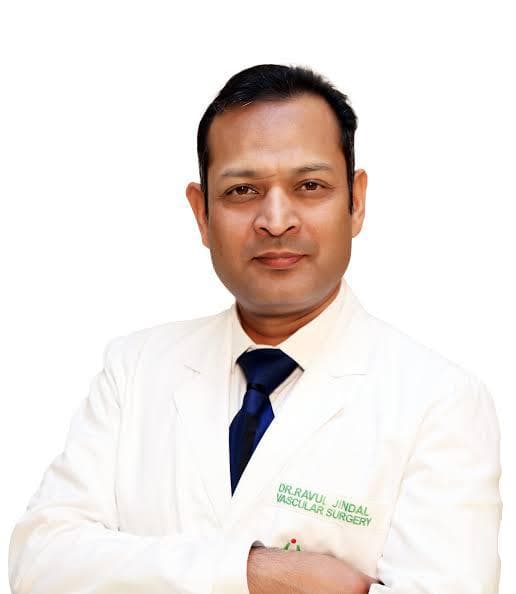
Dr. Ravul Jindal Team
Director, Vascular & Endovascular Surgery
MBBS, MS (General Surgery), FRCS (Edinburgh), DNB, FIVS (Fellow of India Vascular Surgery)
Director of Vascular Surgery at Fortis Hospital Mohali with 30+ years of experience in varicose veins, DVT, diabetic foot, and endovascular surgery.