Sclerotherapy for Varicose Veins: Procedure, Benefits, and Recovery

Varicose veins are one of the most common vascular complaints seen in clinical practice, especially among adults who spend long hours standing or sitting, women who have been through pregnancy, and people with a family history of vein disease. Sclerotherapy remains one of the most trusted, minimally invasive treatments for both varicose veins and their milder cousin, spider veins. This guide walks through how the sclerotherapy procedure works, what benefits and risks patients should know, and what recovery actually looks like, so you can make an informed decision with your vascular surgeon.
What Is Sclerotherapy?
Sclerotherapy is a minimally invasive treatment in which a chemical solution is injected directly into the affected vein using a fine needle. The solution irritates the vein lining, causing it to swell, stick together, and eventually scar shut. Once the vein closes off, blood naturally reroutes through healthier veins nearby, and the treated vein gradually fades from view.
Varicose veins develop when the one-way valves inside leg veins weaken, a condition often called incompetent valves. Because these valves normally work against gravity to carry blood back toward the heart, weakened valves let blood pool instead of flowing properly. Over time, this pooling causes veins to enlarge, twist, and become visible under the skin. Sclerotherapy targets this root mechanism directly at the vein level.
Benefits, Risks, and Why It's Done
In clinical practice, patients pursue sclerotherapy for varicose veins for two main reasons: symptom relief and cosmetic improvement. Beyond making veins look and feel better, the treatment can relieve aching, swelling, burning, and nighttime cramping associated with varicose vein disease.
Key benefits include:
- No anesthesia is typically required; compression alone keeps discomfort minimal
- Fast results for smaller veins, spider veins often respond within 3 to 6 weeks, while larger veins may take 3 to 4 months
- Durable outcomes once treatment succeeds, though new varicose veins can still form later in life
Like any medical procedure, sclerotherapy carries some risk. Mild swelling, warmth, and discomfort at the injection site are common and usually settle within days to weeks. Less common side effects include bruising, small skin sores, darkened skin, or brown spots that typically resolve within three to six months. Rarely, patients may develop a blood clot in the treated vein, and in very rare cases this can progress to deep vein thrombosis (DVT) or, more seriously, a pulmonary embolism, a medical emergency that requires immediate care. Allergic reactions to the injected solution are uncommon but possible. Patients who are pregnant, breastfeeding, or have an active blood clot are generally not candidates for this treatment.
What Happens During the Sclerotherapy Procedure
Sclerotherapy is performed in-office and typically takes 30 to 45 minutes, depending on how many veins are being treated. Based on medical evidence and standard vascular protocols, the procedure generally follows these steps:
- Vein mapping – Ultrasound imaging may be used to locate the veins that need treatment, starting with the largest ones
- Skin preparation – The treatment area is disinfected and the skin is gently stretched at the injection site
- Injection – A fine needle delivers a liquid or foam solution directly into the vein; the type and amount depend on vein size
- Post-injection observation – Patients often rest for about 15 minutes to monitor for any reaction
Patients may feel a light pinch, mild burning, or brief cramping, particularly in larger veins. A single session typically closes an estimated 50 to 80 percent of treated veins. If a vein doesn't respond fully, your provider may recommend a different solution or an alternative approach such as laser therapy. Patients often ask how many sessions they'll need. The honest answer is that it depends on vein size and severity, and setting realistic expectations upfront helps avoid disappointment later.
How to Prepare for Sclerotherapy
Preparation matters for both safety and results. Before your appointment, your provider will review your medical history, including any prior blood clots, heart disease, allergies, and current medications or supplements.
You may be asked to pause certain medicines beforehand:
- Aspirin, ibuprofen, and other anti-inflammatories – these can interfere with how the solution works or increase bleeding risk
- Blood thinners, iron, or herbal supplements – these also raise bleeding risk and should be discussed with your provider
- Certain antibiotics like tetracycline or minocycline – these can cause skin staining if taken close to treatment
- Prednisone – this may reduce how well the treatment works
Avoid shaving your legs or applying lotion before your visit, and wear loose, comfortable clothing. If you already own compression stockings from a previous treatment, bring them along so your provider can confirm they still fit properly.
Recovery, Aftercare, and Results
One of the biggest advantages of sclerotherapy is how quick the recovery is compared to surgical vein treatments. Most patients can drive themselves home and resume normal activity the same day. Walking is actually encouraged, as it supports healthy circulation and helps prevent blood clots from forming.
For the best outcome, follow these aftercare guidelines for at least 48 hours to two weeks:
- Wear compression stockings or wraps as directed, generally for 3 to 7 days, sometimes up to two weeks
- Avoid aspirin and ibuprofen; acetaminophen is fine for discomfort
- Skip hot baths, saunas, and whirlpools; cooler showers are fine
- Avoid direct sun exposure and tanning on treated areas for about two weeks
- Avoid strenuous exercise until your provider clears you
A follow-up visit is usually scheduled about a month after treatment to assess results. Contact your provider promptly if you notice inflammation near the groin, sudden leg swelling, small ulcers at the injection site, or unusual red streaking, as these can signal a rare but serious complication.
Sclerotherapy for Patients in Mohali and Chandigarh
For patients across Mohali, Chandigarh, and the wider Punjab region, access to a qualified vascular and endovenous surgery specialist matters when considering varicose vein treatment. Many patients search for a "varicose vein doctor near me" or "sclerotherapy treatment in Mohali" only after symptoms like leg heaviness or visible veins start affecting daily life. Consulting an experienced vascular surgeon early allows for accurate diagnosis, often supported by ultrasound evaluation, and a treatment plan tailored to the size, location, and severity of the affected veins.
Book a Consultation with Dr. Ravul Jindal - Vascular Surgeon, Fortis Hospital Mohali
Book your consultation while you read.
Recent Insights

Frequently Asked Questions
How long does a sclerotherapy session take?
How many sclerotherapy sessions will I need?
Can varicose veins come back after sclerotherapy?
Related Articles

Laser Treatment for Varicose Veins: How Does EVLA Work?

How to Prevent Varicose Veins in Legs During Pregnancy

Can Young People Get Varicose Veins? | Dr. Ravul Jindal
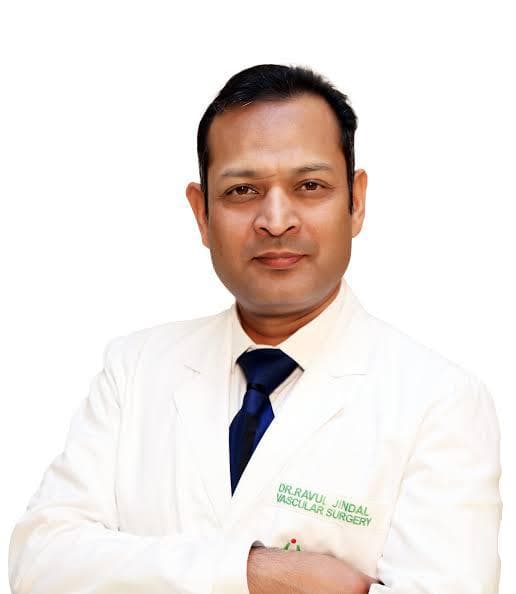
Dr. Ravul Jindal Team
Director, Vascular & Endovascular Surgery
MBBS, MS (General Surgery), FRCS (Edinburgh), DNB, FIVS (Fellow of India Vascular Surgery)
Director of Vascular Surgery at Fortis Hospital Mohali with 30+ years of experience in varicose veins, DVT, diabetic foot, and endovascular surgery.