Early stage varicose veins symptoms

Early Stage Varicose Veins Symptoms: What Your Legs Are Trying to Tell You
Medically reviewed by Dr. Ravul Jindal, Senior Vascular Surgeon
In clinical practice, one of the most common observations is that patients arrive with varicose veins that have already progressed significantly- simply because they dismissed the early warning signals. Early stage varicose veins symptoms are subtle, easy to overlook, and often mistaken for general fatigue or aging. Recognising them at the right time can make a meaningful difference in both treatment outcomes and long-term vein health.
Varicose veins develop when the small valves inside the veins weaken or become damaged, making it difficult for blood to move upward against gravity. As a result, blood begins to pool, causing the veins to swell, twist, and become visible through the skin. They are most common in the legs and feet, where the effects of prolonged standing, walking, and gravitational pressure are greatest. Left untreated, what begins as mild swelling can progress to skin changes, ulcers, and serious circulatory issues.
What Are Varicose Veins and Why Do They Develop?
Varicose veins occur when vein valves stop functioning efficiently. These valves are responsible for pushing blood upward toward the heart. When they weaken, blood pools inside the veins, causing them to enlarge and twist. The condition is most common in the lower body due to maximum pressure from daily activity.
Several factors increase your risk. Family history accounts for nearly 50% of all cases. Other contributors include pregnancy, obesity, excess weight, ageing, long periods of standing or sitting, and underlying circulatory conditions. Genetics and lifestyle habits also play a significant role. Patients often ask whether their occupation is a factor - and the answer is yes. Professions requiring extended standing or sitting are strongly associated with early-stage varicose vein symptoms.
10 Early Stage Varicose Veins Symptoms You Should Not Ignore
1. Visible Veins on the Legs
The most recognisable sign is the appearance of bulging, rope-like, visible veins on the legs. They may appear blue, purple, or dark red and become more prominent after long periods of standing. Spider veins- tiny coloured lines visible beneath the skin-are often an earlier indicator of deeper vein problems developing below the surface.
2. Leg Heaviness or Persistent Fatigue
A feeling of heaviness or fatigue in the legs, especially toward the end of the day, is one of the earliest signs of vein dysfunction. This happens because blood pooling increases pressure within the veins. The sensation often improves after resting or elevating the legs.
3. Swelling Around Ankles and Feet
Persistent swelling in the lower legs, ankles, and feet signals that the veins are struggling to return blood to the heart. Swelling that appears consistently at the end of the day is a clear indicator of early venous insufficiency and should never be dismissed as routine tiredness.
4. Aching or Throbbing Pain in the Legs
A dull ache, burning, or throbbing sensation in the legs-particularly by evening or after prolonged activity- is a hallmark symptom. Patients often describe cramping and achy legs after physical activity, which correlates directly with impaired blood flow in the lower limbs.
5. Itching, Dryness, or Skin Changes
Itching or dryness around the ankles and calves is frequently mistaken for a skin irritation. In reality, it often indicates reduced blood flow through the affected veins. Some patients also notice an unnatural shine to their legs, changes in skin pigmentation, or skin that appears to peel-all early signs of underlying vein problems.
6. Restless Legs at Night
A frequent but overlooked early stage varicose veins symptom is restlessness- an uncomfortable urge to move the legs, particularly at night. This disrupts sleep quality and is closely associated with venous insufficiency. Early assessment of this symptom allows for simpler, more effective varicose vein treatment.
7. Muscle Cramps and Night-Time Leg Cramps
Night-time leg cramps, especially in the calf, are extremely common among patients with early varicose veins. These cramps are sudden, painful, and recurring, caused by poor circulation in the lower limbs. Based on medical evidence, they are often one of the first symptoms patients report in a clinical consultation.
8. Skin Discolouration and Spots on Lower Legs
Skin darkening around the ankles or lower legs occurs due to poor circulation and blood leakage from weakened veins. Red spots on the lower legs may indicate that blood vessels have weakened and burst beneath the surface-a sign that vascular changes are already underway.
9. Warmth or Tenderness Over the Vein
Inflamed or irritated varicose veins may feel warm, tender, or sensitive to touch. This can sometimes indicate superficial thrombophlebitis - a blood clot in a surface vein - and warrants prompt medical evaluation.
10. Delayed Healing of Minor Injuries
If cuts or scrapes on the lower legs take longer to heal, it may reflect poor blood flow caused by varicose veins. This is particularly significant for patients with diabetes or other circulatory conditions, where delayed healing can escalate into serious complications.
When to See a Doctor?
Patients often ask how long they should wait before seeking help. The answer is: do not wait. If you notice consistent swelling, increasing pain, visible raised veins, skin colour changes near the ankles, frequent night-time cramps, or difficulty standing or walking without discomfort, consult a vascular specialist promptly. Ignoring these signs can lead to chronic venous insufficiency, skin ulcers, or deep vein thrombosis (DVT).
Diagnosis and Treatment Options
Varicose veins are diagnosed through a physical examination of the legs while standing, combined with duplex ultrasound to assess blood flow and identify faulty valves. This non-invasive diagnostic test provides a clear picture of venous function. Treatment depends on severity. Lifestyle changes - including elevating legs, exercising, avoiding prolonged standing, wearing compression stockings, and losing weight - form the foundation of conservative care. For more advanced cases, minimally invasive procedures such as sclerotherapy, laser therapy, and radiofrequency ablation are highly effective. Surgical options like vein stripping and ligation are reserved for severe cases. Modern procedures are largely outpatient-based, require minimal downtime, and are far less invasive than traditional surgery.
Prevention and Daily Habits That Support Vein Health
While varicose veins cannot always be prevented, consistent habits significantly slow their progression. Stay physically active to support circulation. Maintain a healthy weight to reduce pressure on the legs. Take short breaks every hour if your work involves extended sitting or standing. Wear supportive footwear, practice ankle pumps, calf raises, and daily walking. Stay hydrated to support healthy blood flow, and elevate your legs for ten to fifteen minutes each day.
Book a Consultation with Dr. Ravul Jindal - Vascular Surgeon, Fortis Hospital Mohali
Book your consultation while you read.
Recent Insights


Frequently Asked Questions
What are the first signs of varicose veins in the legs?
Can early stage varicose veins be treated without surgery?
Are varicose veins dangerous if left untreated?
How is varicose vein diagnosis confirmed?
Related Articles

Sclerotherapy for Varicose Veins: Procedure, Benefits, and Recovery

Laser Treatment for Varicose Veins: How Does EVLA Work?

How to Prevent Varicose Veins in Legs During Pregnancy
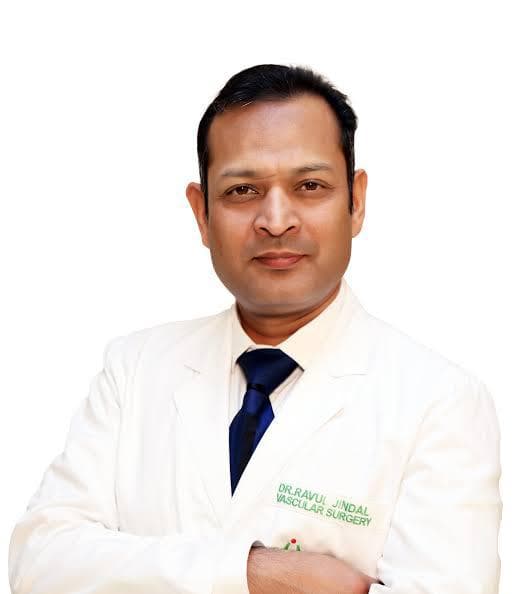
Dr. Ravul Jindal Team
Director, Vascular & Endovascular Surgery
MBBS, MS (General Surgery), FRCS (Edinburgh), DNB, FIVS (Fellow of India Vascular Surgery)
Director of Vascular Surgery at Fortis Hospital Mohali with 30+ years of experience in varicose veins, DVT, diabetic foot, and endovascular surgery.