Varicose Veins During Pregnancy: Causes, Symptoms & Treatment | Dr. Ravul Jindal

Varicose Veins During Pregnancy: Causes, Symptoms & Treatment
Medically reviewed by Dr. Ravul Jindal, Senior Vascular & Endovascular Surgeon
Varicose veins during pregnancy are one of the most common yet underestimated vascular concerns among expectant mothers. In clinical practice, patients frequently ask whether those twisted, bulging veins appearing on their legs are dangerous - and the reassuring answer is that they are usually harmless, though they can cause significant discomfort. As a vascular surgeon, I believe that understanding the cause, risk factors, and management options empowers pregnant women to take proactive steps toward better vein health.
This blog covers everything you need to know about pregnancy varicose veins - from why they develop to when medical attention is genuinely necessary.
What Are Varicose Veins and Why Do They Appear During Pregnancy?
Varicose veins are blood vessels that appear as twisted, bulging ropes beneath the skin, most commonly on the legs and ankles. They develop when vein valves - tiny flap-like structures that control one-way blood flow toward the heart - weaken or fail, causing blood pooling and enlargement of the affected vein.
During pregnancy, this process is accelerated by three cumulative physiological changes:
First, blood volume increases dramatically. Blood plasma rises by 40–50% and red blood cell mass surges by 20–30%, placing greater demand on the circulatory system.
Second, the growing uterus exerts increasing pressure on the inferior vena cava - the large vein responsible for returning blood from the lower body to the heart - contributing directly to vein expansion in the legs and pelvic veins.
Third, elevated hormonal levels, particularly progesterone and estrogen, relax vein walls and compromise vein valves, making blood flowing backward far more likely.
The result is that varicose veins are among the most common pregnancy complications, affecting up to 40% of pregnant women, with symptoms typically worsening toward the third trimester.
Common Symptoms of Varicose Veins in Pregnancy
Patients often describe a familiar pattern of discomfort. Symptoms of pregnancy varicose veins include:
- A heavy, tired, or sore feeling in the legs
- Itching around the varicose veins
- Leg cramps, especially after prolonged sitting or standing
- Pain, aching, throbbing, or tenderness in the lower legs
- Swelling (edema) in the legs and ankles
Symptoms are typically worse after long periods of standing or sitting and improve when legs are elevated. It is also worth noting that spider veins — thinner, web-like, red or blue lines visible through the skin — frequently appear alongside varicose veins during pregnancy, though they do not bulge or cause pain.
Risk Factors: Who Is More Likely to Develop Them?
Based on medical evidence and clinical observation, several factors increase varicose vein risk during pregnancy:
- Genetics: A family history of varicose veins — particularly in a biological mother or grandmother — significantly raises your likelihood. Hereditary predisposition is one of the strongest predictors.
- Multiple pregnancies: With each additional pregnancy, vein elasticity decreases, valve functioning deteriorates, and the risk of worsening pre-existing veins grows.
- Weight: Overweight or obesity increases physical pressure on the venous system.
- Pre-existing varicose or spider veins: Pre-existing vein conditions intensify under the hormonal changes and increased blood volume of pregnancy.
- Diet: High sodium intake and low fiber and water consumption contribute to fluid retention and increased vein pressure.
Complications: When Varicose Veins Become a Medical Concern
While varicose veins are typically not dangerous, patients should be aware of potential complications. In some cases, they can lead to superficial thrombophlebitis - a blood clot forming on the surface of a varicose vein. More seriously, varicose veins can increase the risk of deep vein thrombosis (DVT), which carries the risk of a pulmonary embolism - a life-threatening condition.
Approximately 1 in 4 pregnant women develops varicose veins, and a small subset faces elevated blood clot risk. Seek prompt evaluation from a vein specialist if you notice pain, discoloration, skin changes, or any tendency to bleed over the varicose vein.
Diagnosis of Pregnancy Varicose Veins
Diagnosis begins with a clinical examination of the legs, genitals, and rectal area depending on symptom location. For more severe presentations, a Doppler ultrasound - a non-invasive test that evaluates blood flow through both surface veins and deep veins - is recommended. This assessment is essential to rule out DVT and prevent serious complications such as pulmonary embolism.
Management During Pregnancy: Relieving Symptoms Safely
Since varicose veins during pregnancy are usually harmless and resolve after childbirth, healthcare providers typically focus on symptom management rather than active treatment. Evidence-based preventative measures and lifestyle adjustments include:
- Avoid prolonged standing and sitting; change positions frequently
- Sleep on your left side to reduce pressure on the inferior vena cava
- Keep legs elevated while resting or nursing
- Wear compression stockings or supportive pantyhose and tights to support blood circulation
- Maintain a healthy diet - reduce sodium, increase fiber
- Engage in regular, gentle exercise to promote blood flow
- Avoid high heels, which restrict circulation
Walking is particularly beneficial - even short daily walks meaningfully improve venous blood flow and reduce symptom severity.
Treatment Options After Pregnancy
It is typically advised to wait approximately six months after giving birth before pursuing formal treatment, as varicose veins often resolve within 6 to 12 weeks on their own. If they persist, a qualified vascular surgeon can recommend several minimally invasive options:
- Sclerotherapy: A chemical solution is injected into the vein, causing it to seal and gradually dissolve into scar tissue. High success rate with minimal downtime.
- Laser Ablation (EVLT): A laser fiber is inserted into the affected vein, delivering targeted energy to close it. A popular, effective endovenous ablation technique.
- Radiofrequency Ablation (RFA): Uses radiofrequency energy to heat and close larger varicose veins with minimal recovery time.
- Ambulatory Phlebectomy: An outpatient procedure using tiny incisions to physically remove small varicose veins under local anesthetic.
- VenaSeal: A medical adhesive delivered via catheter seals the vein - no compression stockings required post-procedure.
Book a Consultation with Dr. Ravul Jindal - Vascular Surgeon, Fortis Hospital Mohali
Book your consultation while you read.
Recent Insights

Frequently Asked Questions
When do varicose veins appear during pregnancy?
Do varicose veins go away after pregnancy?
Is it safe to treat varicose veins while pregnant?
Can varicose veins during pregnancy cause blood clots?
Related Articles

Sclerotherapy for Varicose Veins: Procedure, Benefits, and Recovery

Laser Treatment for Varicose Veins: How Does EVLA Work?

How to Prevent Varicose Veins in Legs During Pregnancy
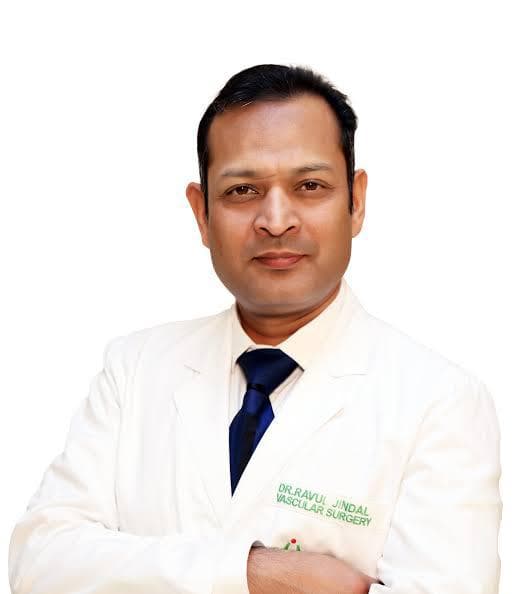
Dr. Ravul Jindal Team
Director, Vascular & Endovascular Surgery
MBBS, MS (General Surgery), FRCS (Edinburgh), DNB, FIVS (Fellow of India Vascular Surgery)
Director of Vascular Surgery at Fortis Hospital Mohali with 30+ years of experience in varicose veins, DVT, diabetic foot, and endovascular surgery.