Laser vs Surgery for Varicose Veins: Which Is Best?

Laser Treatment vs Surgery for Varicose Veins: Which Option Is Right for You?
In clinical practice, one of the most common questions patients ask is whether laser treatment or surgery for varicose veins is the better choice. As a vascular and endovenous surgeon treating patients across Mohali and Chandigarh, Dr. Ravul Jindal regularly sees patients confused by conflicting information online. Varicose veins - swollen, twisted veins caused by faulty vein valves - affect people of all ages, and the right treatment depends on vein failure pattern, severity of condition, and individual recovery expectations. This guide breaks down laser treatment vs surgery for varicose veins, based on medical evidence and real clinical decision-making, so you can discuss options confidently with your vascular specialist.
Understanding Varicose Veins and Why Treatment Choice Matters
Varicose veins develop when vein valves in the leg veins stop closing properly, causing blood flow reversal and pressure buildup that leads to vein enlargement. Patients often ask why one relative was treated with surgery while another had laser treatment - the answer lies in valve failure pattern, vein diameter, and whether skin changes, swelling, or ulcers are already present.
How Vein Valve Failure Guides Treatment Planning
Before recommending laser treatment or surgery for varicose veins, a proper treatment assessment evaluates the great saphenous vein, small saphenous vein, and perforator veins involved, along with patient occupation, activity level, and overall recovery expectations. This assessment, not personal preference alone, determines which minimally invasive procedures or traditional surgical methods are appropriate.
Surgical Treatment for Varicose Veins
Traditional surgery - typically vein stripping and ligation - remains an effective option for select cases. It involves removing the diseased vein through small incisions, usually under general anesthesia.
When Surgery Is Still Recommended
Based on medical evidence, surgery is generally reserved for large tortuous veins, recurrent varicose veins after previous procedures, severe varicose veins with associated complications, or complex vein conditions unsuitable for endovenous techniques. While surgery has a decades-long track record and offers long-term results, it involves longer recovery time and more postoperative discomfort compared to minimally invasive methods.
Laser Treatment for Varicose Veins (EVLT/EVLA)
Laser treatment, known medically as endovenous laser ablation (EVLA/EVLT), is a minimally invasive procedure. A thin laser fiber is guided into the faulty vein, delivering laser energy that causes heat sealing of the vein walls. The vein then collapses, and blood rerouting naturally shifts circulation to healthy veins.
How Endovenous Laser Ablation Works in Practice
Performed under local anesthesia through a small catheter, laser treatment requires no large incisions and no stitches. Most patients undergoing this outpatient procedure experience less pain, less discomfort, and quick recovery, often returning to daily activity within 1-2 days. It is widely preferred for moderate varicose veins and patients with minimal downtime requirements.
Laser Treatment vs Surgery for Varicose Veins: Key Differences
Patients frequently want a side-by-side comparison before deciding between laser vs surgery for varicose veins. Here is how the two compare across the factors that matter most clinically.
Recovery Time and Downtime
Laser treatment typically allows return to normal activity within 24 hours to a few days. Surgical recovery, by contrast, can take several weeks, with more post-procedure discomfort during healing.
Anesthesia and Pain
Laser treatment is usually performed under local anesthesia with minimal discomfort, while surgery often requires general anesthesia and involves more post-procedure discomfort.
Scarring and Cosmetic Outcome
Because laser treatment uses a small catheter rather than multiple incisions, it results in minimal scarring - often just small punctures with little to no visible marks. Surgery, being more invasive, carries a higher chance of visible scarring.
Cost Considerations
Laser treatment is often less expensive upfront in comparable cases, though cost and insurance coverage vary based on medical necessity and individual health plans. Surgery may involve additional hospital stay costs and extended recovery time, which patients should factor into their decision.
How We Decide Between Laser and Surgery in Clinical Practice
Based on medical evidence and years of hands-on experience, the decision-making process follows a structured path: clinical examination, venous Doppler mapping to confirm vein failure, a risk-benefit discussion covering recovery time, comfort, and cost, and long-term outcome planning to reduce recurrence. The goal is never simply vein closure - it is lasting symptom relief and durable results.
Factors That Influence the Decision
Laser treatment is highly effective for many patients, particularly those with chronic venous insufficiency or symptomatic varicose veins from faulty vein valves. Surgery may still be advised for extensive vein damage, very large veins, or complications that laser treatment cannot fully address. A comprehensive vein evaluation, including diagnostic ultrasound, remains the most reliable way to determine the appropriate treatment for each patient.
Finding the Right Vascular Specialist in Punjab
Patients from Mohali, Chandigarh, and surrounding Punjab towns searching for varicose vein treatment near me should look for a vascular specialist experienced in both laser treatment and surgical approaches, since doctor's evaluation and imaging - not a one-size-fits-all protocol - determine the suitable treatment. Early consultation for leg pain, swelling, heaviness, or skin discoloration helps prevent progression to complications such as skin ulcers.
Book a Consultation with Dr. Ravul Jindal - Vascular Surgeon, Fortis Hospital Mohali
Book your consultation while you read.
Recent Insights


Frequently Asked Questions
Is laser treatment better than surgery for varicose veins?
How long is recovery after laser treatment vs surgery for varicose veins?
Is laser treatment safer than surgery for varicose veins?
When is surgery necessary instead of laser treatment for varicose veins?
Related Articles

Sclerotherapy for Varicose Veins: Procedure, Benefits, and Recovery

Laser Treatment for Varicose Veins: How Does EVLA Work?

How to Prevent Varicose Veins in Legs During Pregnancy
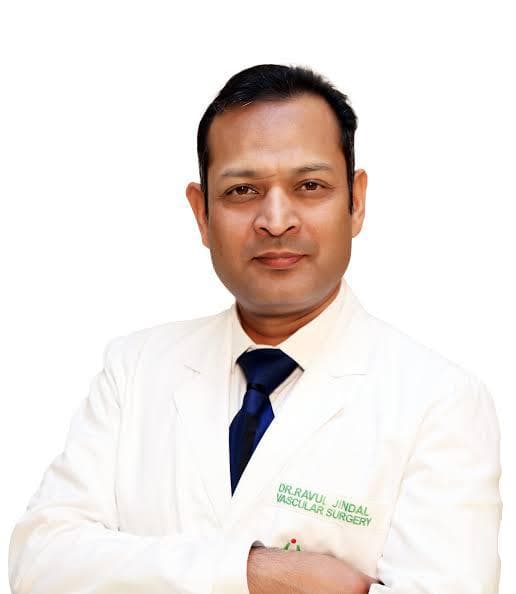
Dr. Ravul Jindal Team
Director, Vascular & Endovascular Surgery
MBBS, MS (General Surgery), FRCS (Edinburgh), DNB, FIVS (Fellow of India Vascular Surgery)
Director of Vascular Surgery at Fortis Hospital Mohali with 30+ years of experience in varicose veins, DVT, diabetic foot, and endovascular surgery.